Bringing back a rare Highland habitat
Montane Woodland —made up of hardy, slow-growing trees and shrubs— is one of Scotland’s rarest and most fragmented of habitats. Once found high up on many of Scotland’s hills and mountains, today it survives only in scattered fragments.
The Coire na Ciste Montane Woodland Project is an exciting partnership effort to help bring this lost habitat back to a small area of Cairngorm Mountain (Cairn Gorm).
What are we doing?
In August 2025, a carefully chosen mix of locally native tree and shrub species – grown from seed collected locally – will be planted in small clusters across the lower Coire na Ciste, one of the corries (coire) found on the North East side of Cairn Gorm. Over time, these clusters of trees will create a patchwork of habitat, gradually expanding as seeds are dispersed and natural regeneration takes over.
Species will include:
- Dwarf birch
- Downy birch
- Eared and downy willow
- Other minor montane willow species
This habitat will take a long time to establish, but progress will be carefully monitored through annual walkovers and a more detailed survey five years after the trees have been planted.
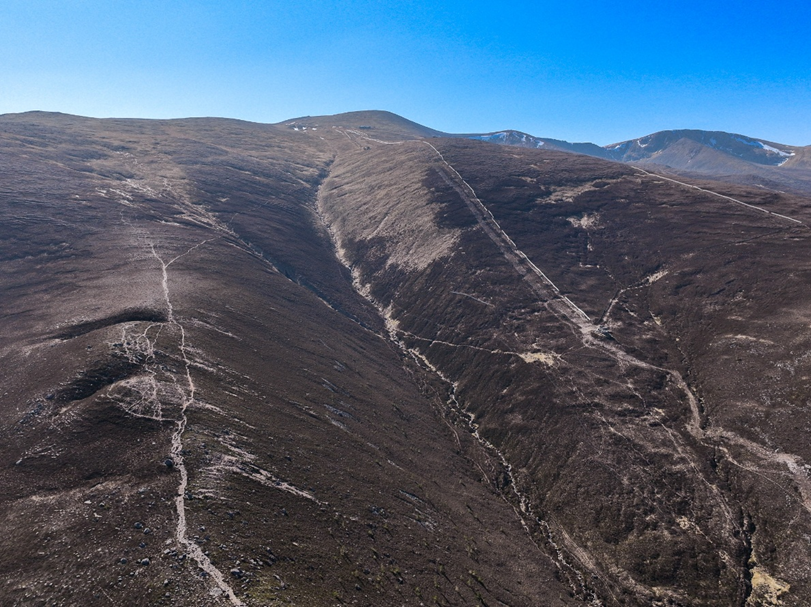
Caption: The top of Coire na Ciste, looking up towards the summit of Cairn Gorm. Most of the planting will take place close to the Allt na Ciste, a small burn which runs down the coire.
Why restore montane woodland here?
This location offers a rare opportunity to restore a lost habitat, support biodiversity, and strengthen ecological connections across the Cairngorms.
Coire na Ciste is a sheltered mountain coire on the north-east side of Cairn Gorm. Its gullies and slopes offer better growing conditions for trees than the exposed ridges above. These are the kinds of places where natural treelines extend upwards into the mountains— and where we’re most likely to see change in the years ahead as a result of climate shifts.
The site is also strategically important. Planting here can help link the forests of Glenmore with wider montane woodland efforts, such as those underway in the Loch Avon basin. This is a key opportunity to strengthen ecological connectivity in line with the Cairngorms National Park Partnership Plan.
Restoring native woodland here builds on decades of reduced grazing pressure, and complements natural regeneration already visible in parts of the Coire. While Scots pine and rowan are returning naturally, other important species — including dwarf birch and montane willows — are still largely absent.
What benefits could this project bring?
- Helps restore one of Scotland’s rarest upland habitats, helping bring back native woodland to the high slopes of Cairn Gorm.
- Supports wildlife with food, shelter and breeding sites
- Gives nature a helping hand, adding diversity to support natural regeneration already underway in parts of the coire
- Improves slope stability and reduces erosion by increasing vegetation cover
- Helps build climate resilience by helping retain soil moisture, slowing runoff, and providing localised shade to the Allt na Ciste – supporting water quality and habitat health.
- Creates cooler, sheltered microclimates that can offer important refuge for wildlife during increasingly hot, dry summers
- Strengthens landscape-scale ecological networks by linking nearby native woodland areas, including Glenmore and the Loch Avon basin.
- Provides an important seed source to support long-term natural regeneration of montane woodland in the heart of the Cairngorms National Park.
Working with mountain users
This project has been carefully designed in partnership with Cairngorm Mountain (Scotland) Ltd to respect and protect the mountain’s long-standing role as a place for year-round access and recreation.
Trees and shrubs can help manage and retain snow, benefiting downhill skiers and ski tourers.
Project Partners
Spey Catchment Initiative
Project Lead
SCI is an environmental charity working to restore and enhance habitats across the River Spey catchment. It leads the design, coordination and delivery of this project.
Cairngorms National Park Authority
Funder
A key aim for the Cairngorms National Park Authority and its partners is conservation and enhancement of natural heritage. This project helps meet national and local park goals for biodiversity, and climate adaptation.
Cairngorm Mountain (Scotland) Ltd (CMSL)
Land Manager
CMSL manages the Cairngorm estate and is supporting the project with local knowledge, tree transport, ranger assistance, and help with photography and communications. The project aligns with CMSL’s environmental aims and the Cairngorm Masterplan.

Highlands and Islands Enterprise (HIE)
Landowner
As owners of the Cairngorm estate, HIE supports the project as part of the Cairngorm Masterplan—a long-term strategy to promote environmental restoration, community benefit, and sustainable tourism. www.hie.co.uk