
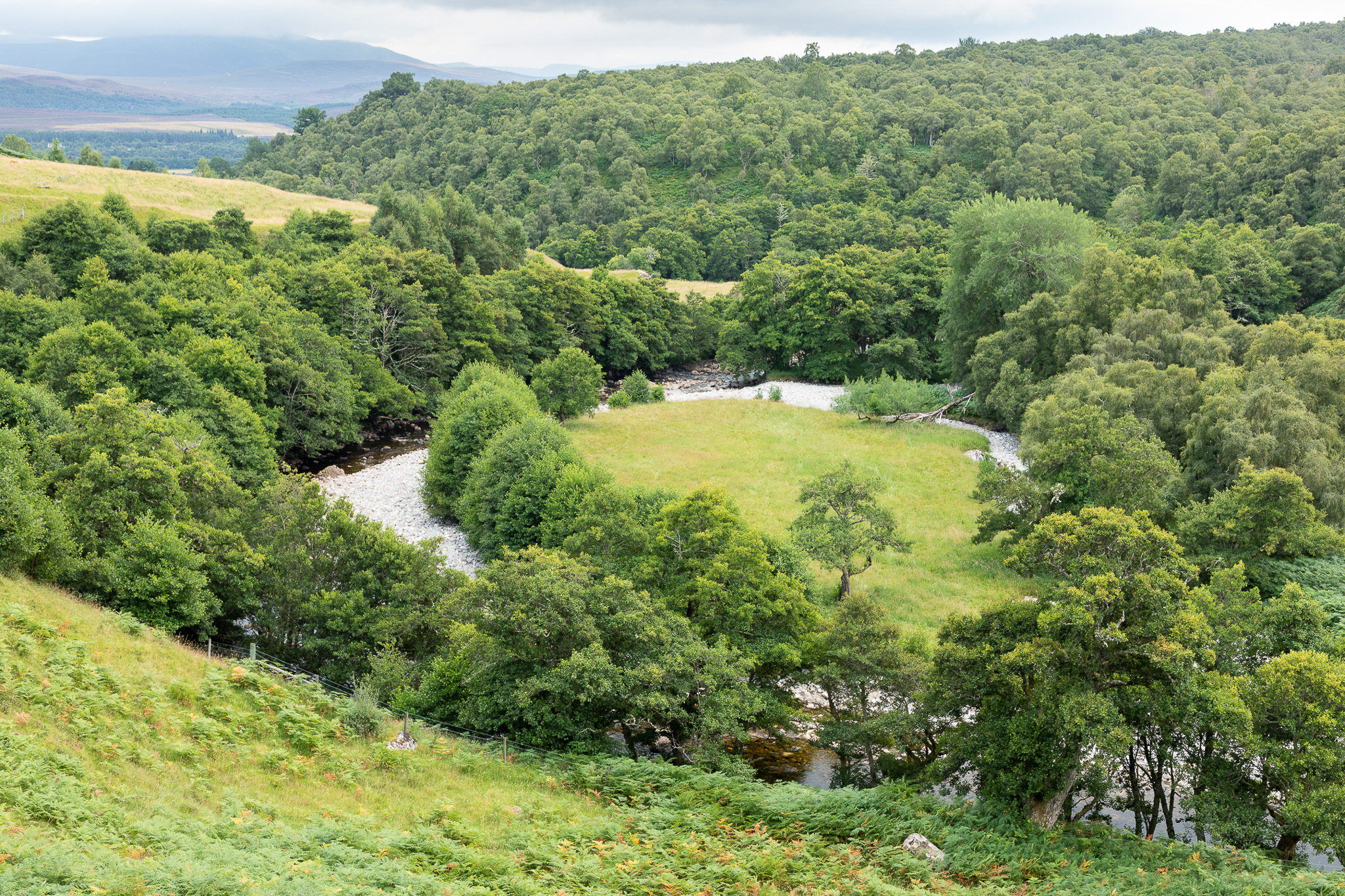
Trees breathe life into river ecosystems
Their leaves provide the building blocks for aquatic food chains, their branches shade rivers protecting vulnerable species from summer heatwaves, their roots bind banks and help water infiltrate the soil and groundwater, they reduce pollution and sediment running into rivers, they can mitigate flooding, store carbon…
“Riparian” woodlands – trees around the river – have so many functions and benefits. Protecting, restoring and expanding these great habitats is a real priority for SCI.
Lost woodland
In Scotland much of our riparian woodlands have been lost. In the distant past if you were to walk from the source of the Spey to Spey Bay you would have spent a lot of your journey weaving between tree trunks, walking through areas of dappled shade and a landscape teeming with wildlife.
Now, according to a 2016 SEPA report, only 13% of Scotland’s riverbanks were in good ecological condition. In a separate report, Marine Scotland state that now only 35% of Scottish riverbanks are protected by any substantial tree cover.
In short, we had more trees in the past and we need more trees to help our rivers in the future.

It’s urgent
With the growing impacts of climate change leading to warmer, drier springs and summers and milder winters without a mountain snowpack, many parts of our river ecosystems could degrade and in worst case scenarios, face collapse.
Restoring riparian woodland is the single most effective, natural and cost-effective way to safeguard our Speyside rivers and burns.
The key benefits of riparian woodland:
1. Provide shade and cool water
Trees around rivers provide vital shade, which cools water – critical as our climate changes.
Cool water is particularly important for some aquatic species such as Atlantic salmon, which could die if temperatures exceed 22 degrees.
2. Improving instream habitat
Trees trunks and deadwood in the river encourage rivers to meander, carve out deeper pools and shallower bars, creating a diversity of habitat for a wealth of creatures.
3. A food source for freshwater life
Whole tree biomass: Leaf litter and deadwood falling into rivers, forms the foundation for the river’s food chain. Invertebrates from trees can form up to 90% of the diet for a number of salmonid fish, such as the brown trout.
4. Binding riverbanks
Tree roots can help bind and strengthen riverbanks, influencing channel and bank erosion.
5. Provide natural flood management
Tree roots significantly aid infiltration into soils and groundwater. The rougher surfaces of woodlands also slow the flow and reduce runoff. At scale, these factors can help with flood management and reduce peak flood levels.
6. Reduce diffuse pollution and nutriment and pesticide run off
Riparian woodland buffer strips between farmland and rivers is a great way to reduce impacts from agricultural activities, be it livestock too close to the water, or further down the catchment, flows from arable land increasing nitrates or other chemicals in the water.
7. Connect our landscape, creating nature networks
Riparian habitats are living veins through our landscapes, connecting upland areas with lowlands and acting as corridors for species and habitat connections, movement and survival – from mosses and lichens through to large mammals. River habitats connect.
Read more…
For more information please see this detailed guide from Forest Research.