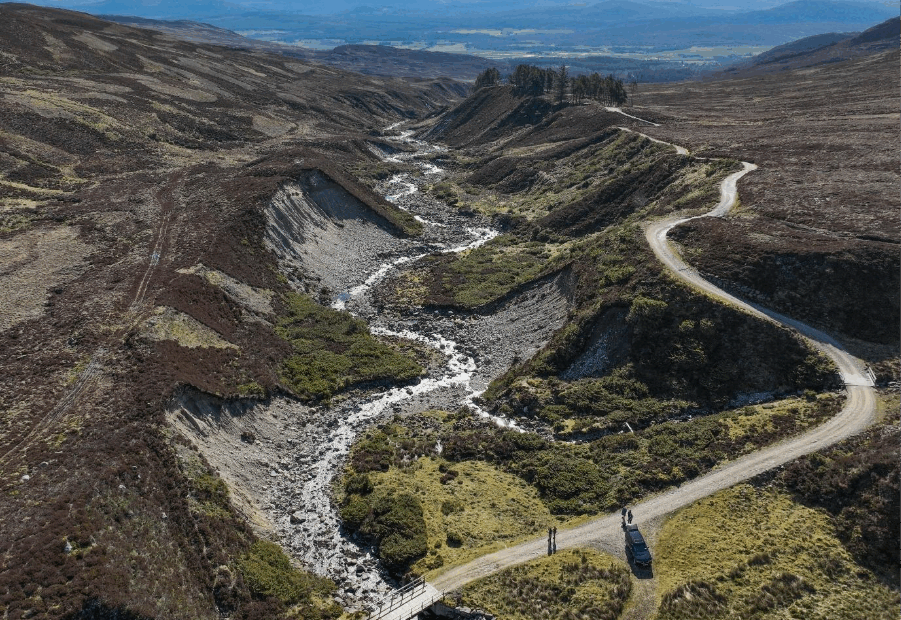
We are pleased to announce that we have finished our Allt Mor Erosion Scar Investigation, a project which was funded by the Scottish Government’s Nature Restoration Fund, administered by Nature Scot.
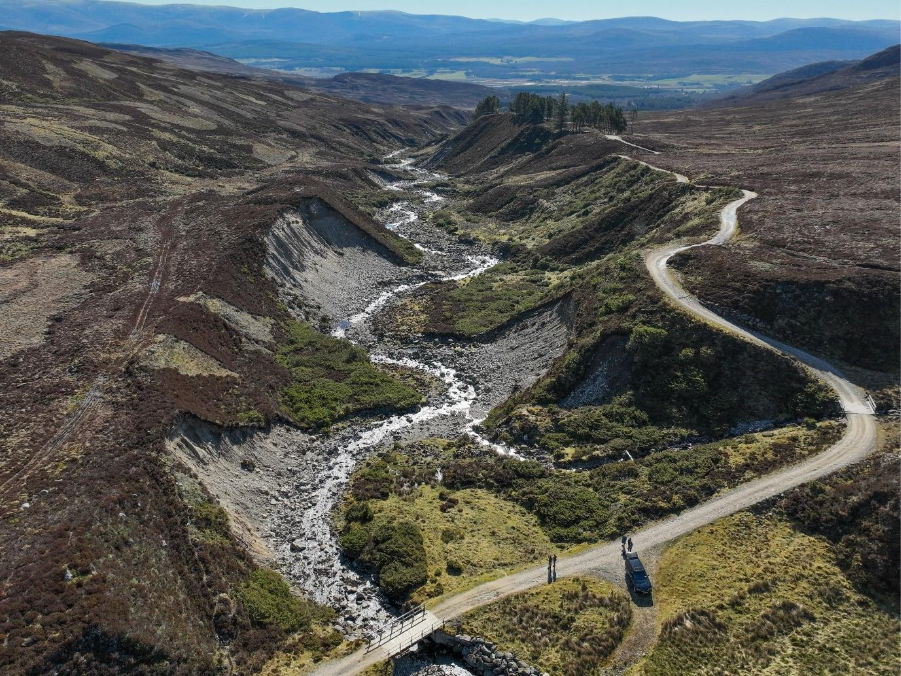
The aim was to investigate how erosion scars on the Allt Mor, a tributary of the River Spey, contribute to sediment build-up and flooding in Kingussie and then look at practical solutions to reduce the volume of sediment entering the river.
Below we have summarised what we did as part of our investigation, the key findings, our conclusions and next steps, as well as future possibilities.
To find out more details about this project, please visit our investigation project page here.
What did we do?
Our investigation took place throughout 2025, concluding in spring 2026 and explored how erosion scars on the Allt Mor, a tributary of the Spey, contributes to sediment build-up and flooding in Kingussie. We also investigated potential solutions, aiming to alleviate flood risk downstream and enhance biodiversity along the river.
The investigation comprised four key elements:
- Collating existing studies to avoid repeated effort.
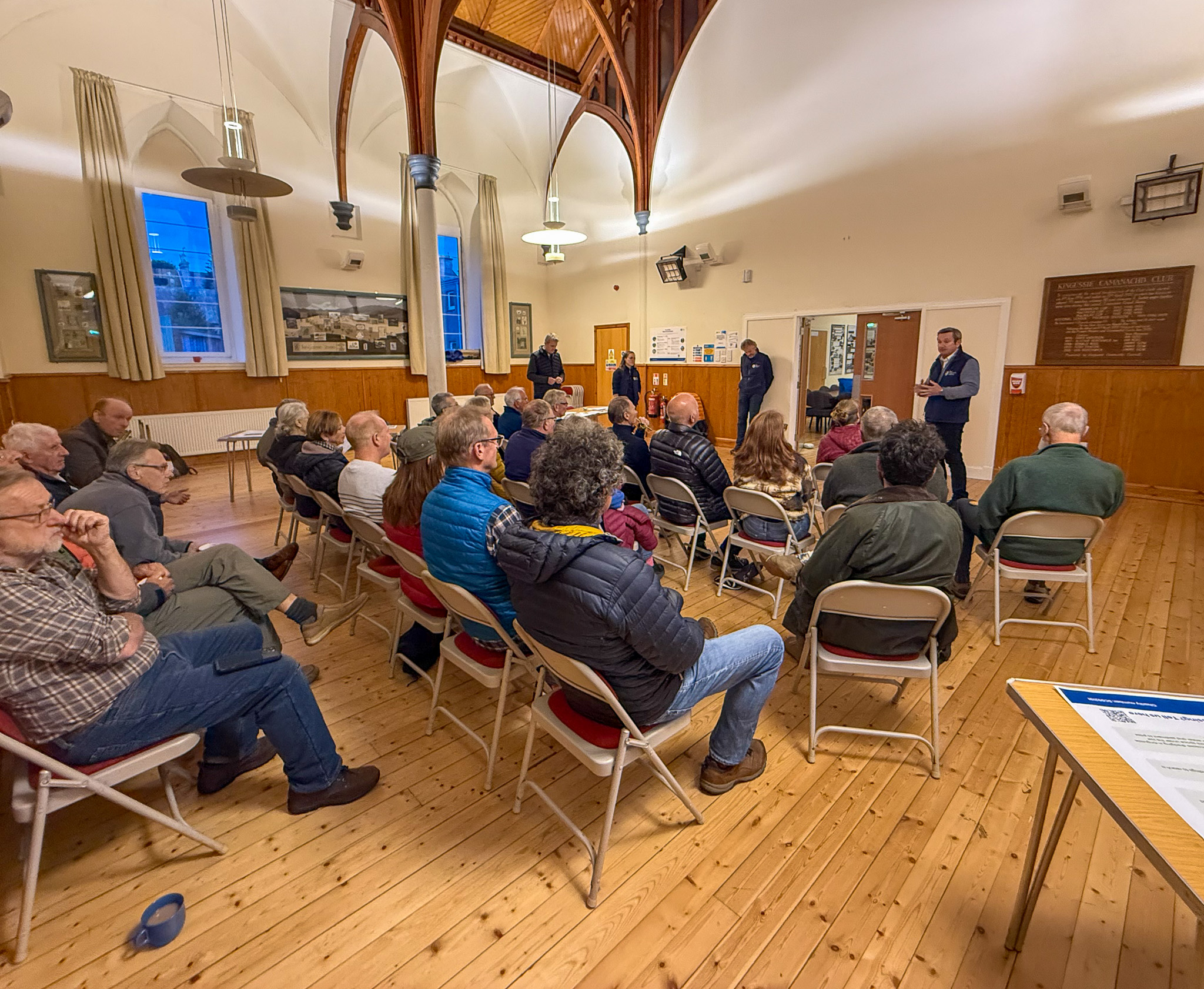
- Community consultation to help shape the direction of the project and inform the best way forward.
- Baseline surveys to understand current conditions.
- CBEC Eco-engineering designing and modelling a potential solution to stabilise the four most severe erosion scars, together with riparian vegetation recovery techniques, with input from key stakeholders and the community.
Gathering information: existing research, community consultation & baseline surveys
A great deal of work has already gone into the Allt Mor/ Gynack to try and resolve the flooding issues. Action to date includes dredging of the River Gynack and construction of the flood alleviation channel diverting water and sediment from the Allt Mor into Loch Gynack.
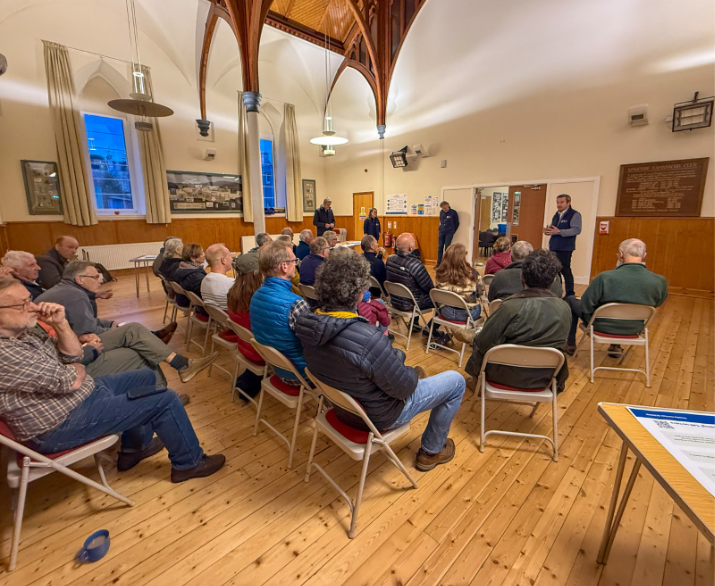
The community consultation events were an integral part of the investigation and provided key information and guidance throughout. Many community members suggested conducting an economic impact assessment to evaluate the ‘cost of doing nothing’ against the cost of intervention. This wasn’t something that could be included as part of this investigation but is something we would recommend doing in the future.
Low-cost interventions were also discussed such as removing unstable trees on the riverbank, which could be an issue if washed down to Kingussie, increasing flood risk. These interventions were prioritised and taken forward where possible – read more about these and other steps taken in our ‘Investigation outcomes’ section below.
Dredging was also raised multiple times by the community. Again, this work is outside the scope of this investigation, however we did raise concerns with Highland Council and connect members of the community with key contacts. We hope this leads to a more coordinated and visible approach to dredging in Kingussie moving forward.
The baseline surveys commissioned as part of this investigation provided key insights into current conditions along the Allt Mor and informed recommendations for future work. For example, herbivore pressure is currently too high to allow trees and shrubs to establish in order to aid slope stabilistation. Therefore, livestock fencing will be an essential element of any intervention. Data collected also provides a benchmark to assess the impact of any works and changes in land management, such as the installation of a new deer fence upstream of the erosion scars.
Looking at solutions: CBEC Eco-Engineering Study and Report
CBEC Eco-Engineering were commissioned as part of this investigation to survey the river and design potential solutions to tackle the build-up of sediment in Kingussie by reducing upstream erosion.
Through modelling, CBEC calculated that 60–75% of sediment entering the Allt Mor and accumulating downstream originates from four severe erosion scars upstream of Kingussie.
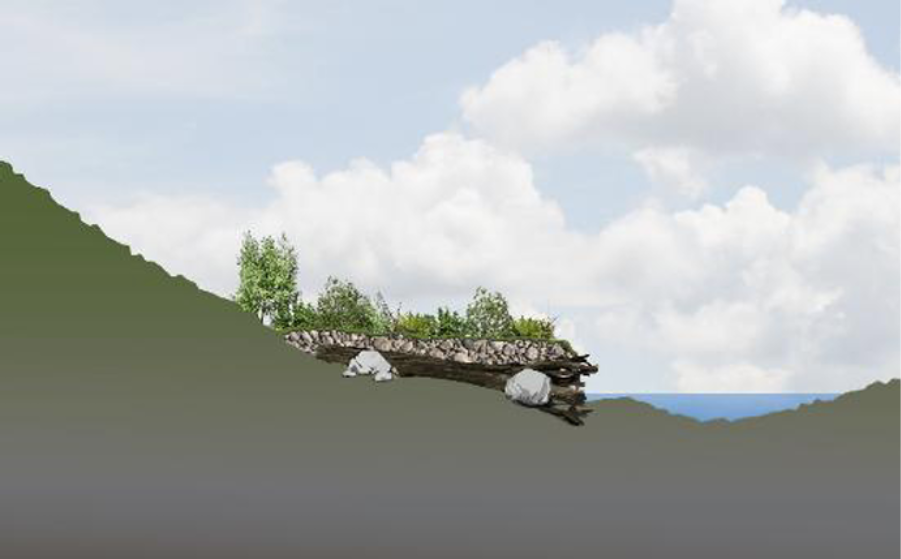
After extensive analysis and design work CBEC proposed a nature-based solution to stabilise the scars — reprofiling and revegetating the slopes and using large woody structures to construct benches at their base. This approach could reduce overall sediment input by an estimated 40–50% over a decade, with around half of that benefit realised immediately after installing the benches and disconnecting the eroding scars from the river.
CBEC estimated that the construction cost for stabilising the erosion scars would be £820,000. Further costs for revegetation, livestock fencing, pre-construction surveys and long-term monitoring are likely to push the total above £1 million.
To download and view the full CBEC report, click here.
Our conclusion and project outcomes
After careful consideration of the options laid out by CBEC in their report, and following discussions with the community and partners, we have concluded that SCI are not the right organisation to progress this work to a delivery phase. The cost and nature of the project, combined with the uncertainty of success, suggest that it is not appropriate for the Spey Catchment Initiative to lead on implementation. A larger agency, or a collective of partners including those with the appropriate statutory responsibilities, would be better placed to lead and perhaps explore the value of partial or full implementation through an initial economic impact assessment and potentially with the SCI involved in delivery.
Nevertheless, there have been considerable successes, and the investigation has produced real and lasting value:
- Landowners along the Gynack are reassessing and removing unstable riparian trees identified in a previous walkover survey — a practical step to reduce blockage risk at Kingussie’s low bridges.
- Further peatland restoration has been scoped on the estate which would continue to support natural flood management across the catchment.
- Stakeholders involved in sediment management on the Lower Gynack are working more closely together, with dredging planned for 2026 coordinated between Highland Council and Network Rail.
- The baseline survey data also provides a robust reference point for any future intervention.
- It has raised the profile of this issue with key stakeholders and highlighted the need for a sustainable long-term solution, locally and nationwide, to sediment management in a changing climate.
Future possibilities
We are keen that the knowledge gained from this investigation is not lost. We have already shared the findings with some government agencies and corporate partners better placed to take this work forward, encouraging them to consider an active role. We look forward to continuing to liaise with these organisations, together with Pitmain and Glenbanchor Estates, to advise and support them in their ongoing considerations. In so doing, we hope that this project may be progressed further in due course.
As the impacts of the climate crisis grow — bringing more frequent and intense rainfall to catchments like the Spey — issues such as sediment management and flood risk are likely to demand greater focus and priority. Reducing sediment input to the river would bring real benefits, for riparian habitat and wildlife along the Allt Mor, and for the community of Kingussie downstream. The investigation has laid the groundwork. We will continue to encourage further progress, in order to help alleviate or reduce the flooding and sediment management issues in the Allt Mor catchment, and Kingussie down below.
Thanks
Our thanks to Pitmain & Glenbanchor Estates, NatureScot, CBEC, the Kingussie community and all partners who made this investigation possible.